
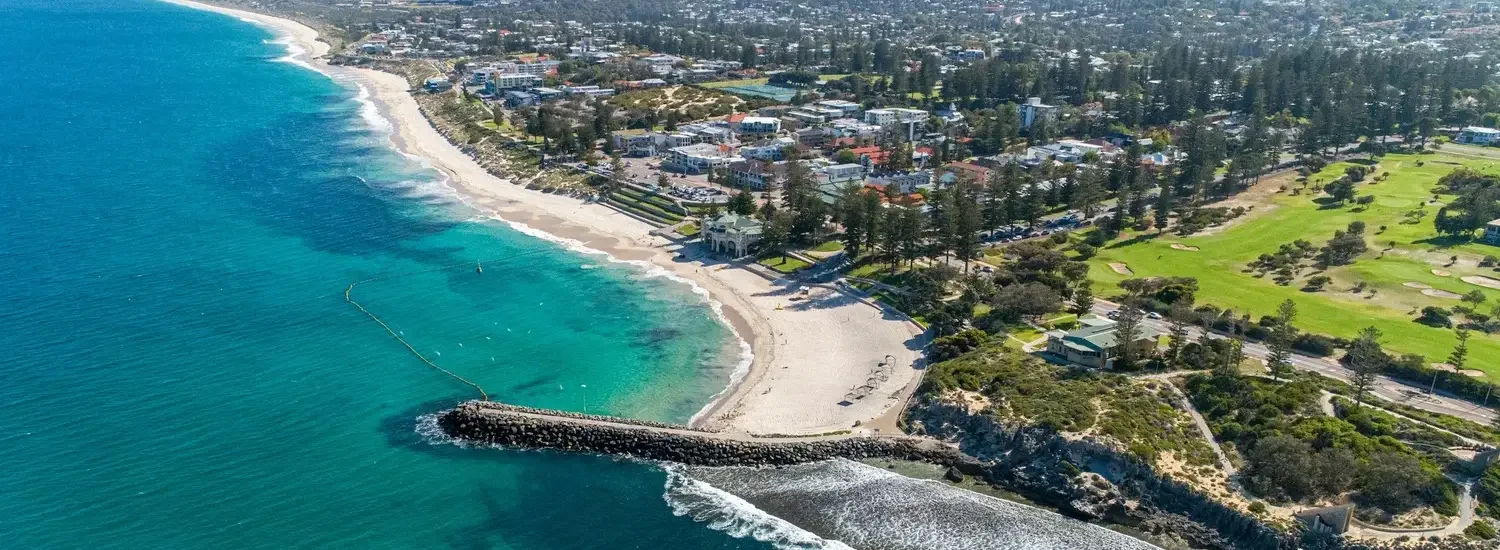
Cottesloe Limestone, Brick & Mortar Restoration
Living in Cottesloe means enjoying some of the best coastal views in Western Australia, but it also means your home is in a constant battle with the elements. The ocean breeze carries salt and moisture straight off the water, and over time, that salt slowly eats away at traditional masonry. Whether you are looking after a classic heritage brick home or a heavy limestone retaining wall facing the sea, proactive restoration is the only way to stop expensive structural damage down the track.
Heritage Brick Repointing - Limestone Retaining Wall Repairs - Fretting Brick Replacement
Marcus Keeley has been on the tools since 1985, working on limestone, brick and mortar. He oversees every job himself, from the first look to the last joint. No subcontractors and no sales reps. We provide thorough, free on-site inspections so you get an accurate quote, not a guess based on a photo.
Over 185+ genuine 5-star Google reviews · Trading since 1985 · Owner on every job
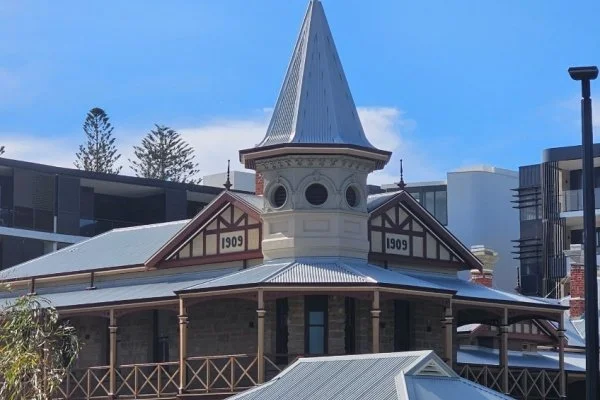
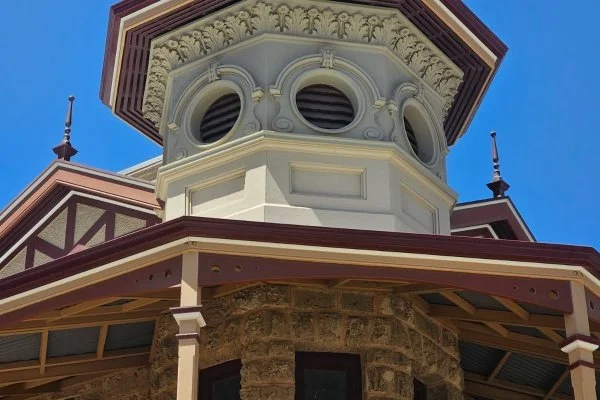
The Impact of Salt Wind Degradation
If you live near the coast, salt crystallising inside porous brick and limestone is a major issue. This is known as salt damp, and it does not fix itself. You might start noticing the early warning signs, like crumbling mortar, a white powdery residue on the brickwork, or the faces of your bricks flaking off entirely.
This flaking is called fretting. When this happens, simply slapping new mortar over the top will not work. The damaged, salty mortar needs to be properly raked out and repointed with the right mix to fix the root cause and let the wall breathe again.
Front line — Cottesloe, North Cottesloe, Swanbourne
Direct sea breeze exposure with some of the heaviest salt loading in the metropolitan area. This requires experience and special attention.
Caught from both sides — Mosman Park, Peppermint Grove
Salty wind from the west, and the Swan river on the east. Walls near the river often have a salt-damp problem at the base at the same time as an ocean salt problem at the top.
Sheltered but not immune — Claremont and the streets furthest from the beach
Enough distance and enough built-up ground in between to knock the airborne salt down considerably. Here the trouble is usually groundwater, reticulation and old cement pointing rather than the sea.
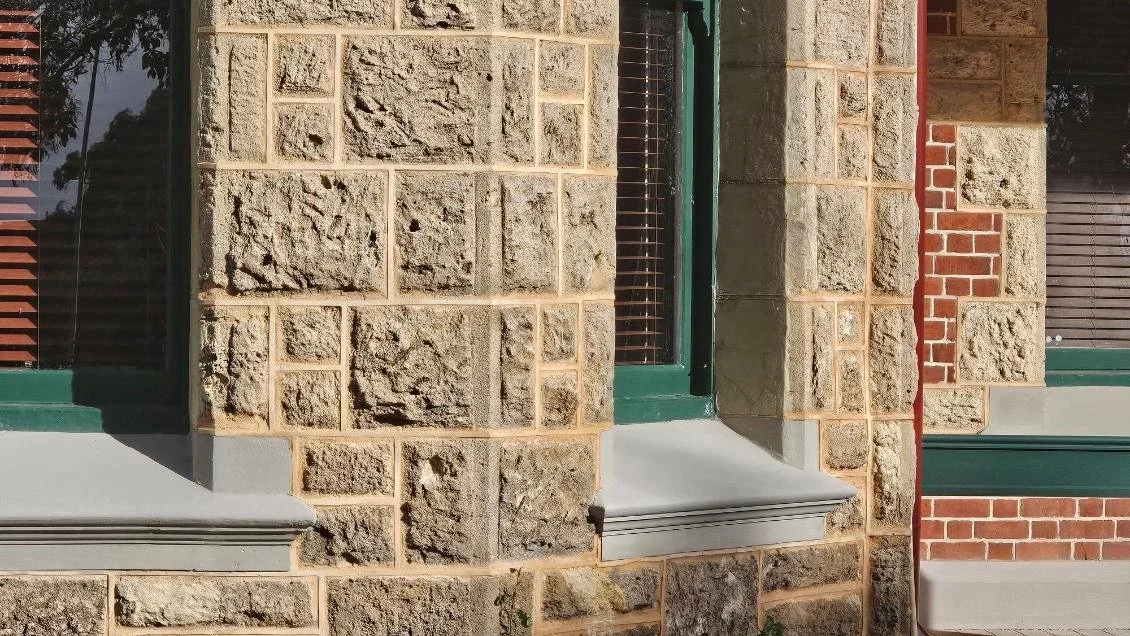
What we do around Cottesloe
Limestone Retaining Wall Repairs
Cottesloe is famous for its solid limestone boundary and garden walls, but limestone acts like a giant sponge for coastal moisture. Because it is a soft stone, it takes the absolute brunt of the harsh ocean weather. We have been working with Perth limestone for decades. If your boundary wall is starting to drop sand or the blocks are deteriorating, we know exactly how to repair it. We take the time to match the texture, age, and colour of the original coastal limestone so the repaired sections blend seamlessly with the rest of your wall.
Heritage Brick Repair and Tuckpointing
Beyond the coastal walls, Cottesloe is home to beautiful, classic properties that require careful aesthetic and structural preservation. We specialise in traditional tuckpointing to restore that crisp, original look to heritage brickwork. This process does not just make the facade look incredible, it completely weatherproofs the mortar joints against driving ocean winds. We also handle lintel replacements. Rusted steel archbars above windows are a massive problem in homes exposed to sea air, causing the brickwork above them to crack and drop. We remove the rusted steel, install fully galvanised lintels, and relay the brickwork perfectly.
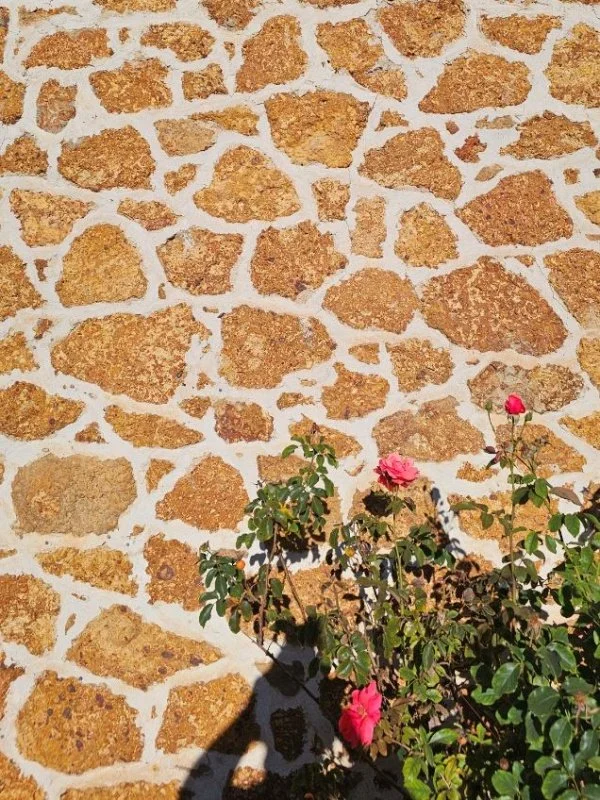
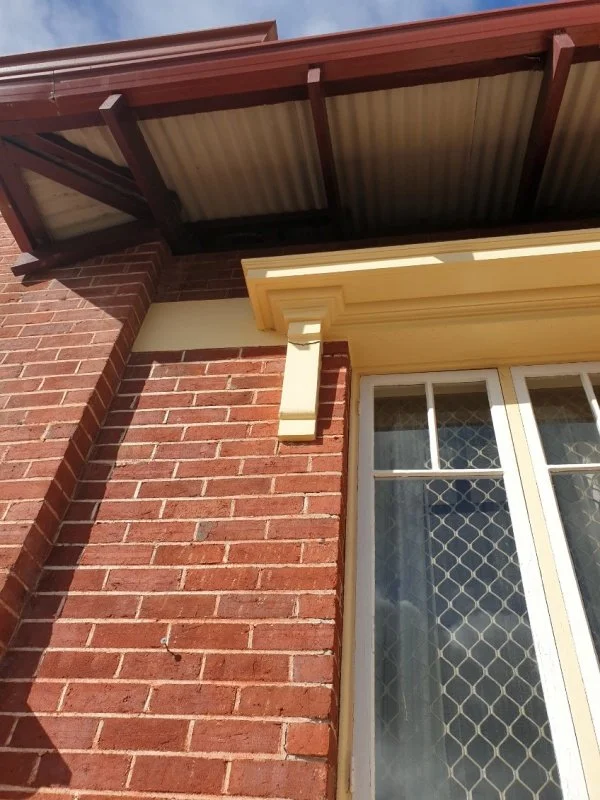
Limestone repair & repointing
Raking out failed joints and repointing in a mix that suits your wall and your distance from the coast.
Mortar pointing & repairs
Fretting, crumbling and missing mortar made good, colour-matched to the original.
Tuckpointing
Traditional Federation and Victorian tuckpointing, restored properly rather than painted on.
Brick repairs & replacement
Fretted and blown bricks cut out and replaced with matching stock.
Heritage brick restoration
Conservation work on listed and character buildings, using period-correct materials.
Wall crack repair & stitching
Cracks stitched with stainless helical bars and repointed so the repair disappears.
Lintel replacement
Rusted steel lintels cut out and replaced before they lift the brickwork any further.
Chimney repairs
Repointing, rebuilding and making safe.
Damp proof treatments
Treating the cause of rising and salt damp, not just the stain.
Bricklaying
New brick and limestone work built to match what is already there.
Cottesloe and coastal suburbs FAQs
-
There is no clean cut-off, but the difference between a wall in North Cottesloe and one in Claremont is substantial, and it shows up in what we specify. Front-line streets with a clear run to the surf take the heaviest loading. A few kilometres inland, with houses and trees in between, airborne salt drops off sharply and groundwater becomes the main issue instead. The practical answer is that if you can smell the ocean from your front garden on a summer afternoon, your wall is getting salt on it.
-
It depends on the height, how much lean there is, whether it is still moving, and what is behind it. A low garden wall with a slight belly that has looked the same for fifteen years is a different thing to a 1.5 metre wall holding a driveway that has moved noticeably since winter. The things that concern us are a lean that has changed recently, cracking at the ends or piers, and any wall retaining something that would matter if it came out. Have it looked at rather than guessing. The inspection costs nothing and it is not a call to make from the footpath.
-
Quarried Tamala limestone is irregular — no two blocks quite alike, visible shell fragments, and a slightly open, granular surface. Reconstituted block is cast, so the blocks repeat, the sizes are consistent and the face is more uniform. The failure pattern is a giveaway too: natural limestone tends to fret at the joints and blow at the face, while cast block cracks through the block and crazes. If you are not sure, it is something we identify in the first two minutes on site, and it changes the repair method significantly.
-
Almost always bore water. Perth groundwater is high in iron, and where reticulation overspray hits masonry the iron oxidises and stains. Most of it comes off with the right treatment, though very old staining can leave a shadow in porous stone. The important part is stopping the overspray first, otherwise you are paying to clean the same wall again in two summers. We will not pressure-blast it clean, because that removes the face of the stone along with the stain.
-
It can be. Splash-out from a salt-chlorinated pool puts salty water onto the coping and the surrounding walls repeatedly, and backwash discharging near a wall soaks the ground beside the footing. It is the same mechanism as sea spray, just closer to home. Managing where the water goes usually solves it; the repair is straightforward once it has stopped.
-
If the property is on that council's Heritage List, most external work needs development approval, and a Heritage Impact Statement is sometimes required with the application. Being on the Local Heritage Survey is different as that is a record rather than a control. State Registered places get referred to the Department of Planning, Lands and Heritage. Because each of these suburbs is a separate council, the answer genuinely does change depending on which side of a boundary you are on. We are happy to help you work out where you stand before you apply.
-
Get photographs of it now, while the damage is fresh and before anyone touches it. Then it is worth establishing whether the wall has settled and stopped or whether it is still moving, because repairing a wall that is still on the move is money down the drain. We can inspect it, tell you what we think caused it, and provide a written scope and quote for the repair, which is generally what is wanted when the two sides are working out who is fixing what.
-
Usually, and it is a large part of what we do on extensions out here. Matching means the stone, the coursing, the joint width and profile, and the mortar colour. Get one of those wrong and the new section reads as new no matter how good the workmanship is. We will show you a sample before committing. Where a genuine match is not achievable we will say so up front and talk through the options, rather than build it and hope you do not notice.
-
Far too dependent on the wall to answer from a description. Height, length, how far it has moved, what is behind it, whether there is any drainage, and access all change the number — a wall you can reach from the street is a different job to one behind a pool. A drainage fix and a rebuild of the top few courses is at the modest end; a full take-down and rebuild is not. The inspection and quote are free, and we will tell you honestly if the cheaper option is the right one.
-
Contact Marcus at Bricks Fix WA and he will let you know where things are at. Sending a few photos first often saves everyone a trip, and if it turns out to be urgent it gets treated that way.
The problems we see most on walls in the area
If you recognise your wall in any of these, get it looked at while it is still the small version of the problem. Almost everything here gets significantly more expensive the longer it runs.
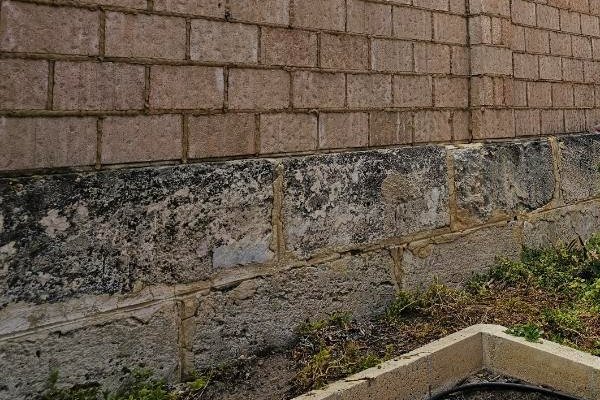
Blown and flaking limestone faces
What you see: the surface of the stone powdering, blistering or shedding in thin scales, leaving a soft hollow behind. Often worst in a band, or concentrated on one elevation while the rest of the wall looks fine.
Why it happens here: salt crystallising just under the surface, pushing the face off from within. On the coast the salt is arriving on the breeze rather than only rising from the ground, which is why we see it high up on walls out here and not just in the bottom courses.
How we fix it: we work out where the salt is coming from first, because replacing stone without addressing that buys you a few years and nothing more. Then the affected blocks are either dressed back and made good, or cut out and replaced with matched stone. Anything sealing the wall — cement pointing, hard render, plastic paint — comes off so the wall can dry through its joints again.
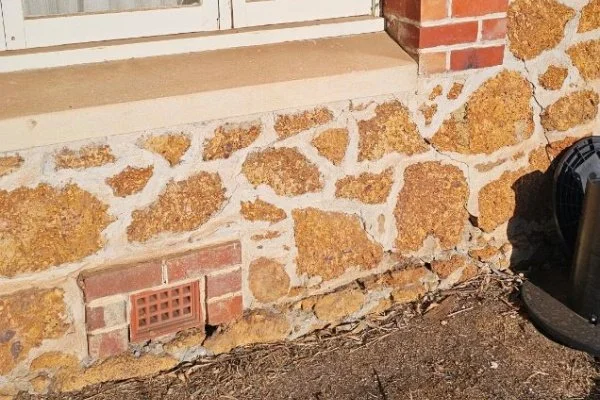
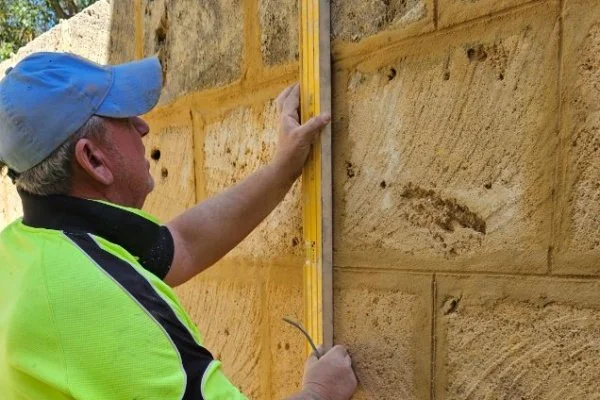
Fretting mortar joints
What you see: joints that have gone soft, hollow and sandy. A drift of pale sand on the paving each time the wind blows. Eventually you can push a finger into the joint.
Why it happens here: the binder in the joint has broken down, usually through repeated wetting and drying with salt in the mix. It is also often the second round of failure — a wall that was repointed in cement twenty years ago, where the cement has held on and the stone either side of it has taken the damage instead.
How we fix it: joints cut back to sound material, flushed out, and repointed in a lime-based mix chosen for the wall's exposure and finished to the original joint profile. Colour is matched with blended sands and oxides. On a job of any size we mix a sample panel and let you look at it against the existing wall in daylight before we commit.
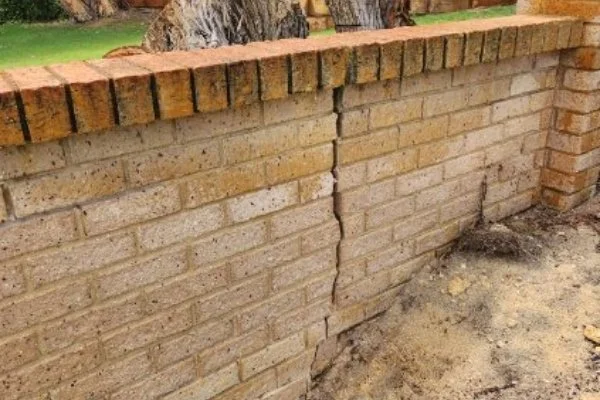
Leaning, bowing and cracked retaining walls
What you see: a belly in the middle of the wall, a top course that no longer runs straight when you sight along it, vertical cracks opening at the piers, or the whole wall tipping out towards the street.
Why it happens here: this is the signature problem of the coastal strip. The land falls away from the ridge down to the beach and the river, so half the gardens between Swanbourne and Claremont are held up by limestone. Many of these walls were built with no drainage behind them, or with weepholes that have been buried by fifty years of garden bed, mulch and mounding. Water gets into the fill, cannot get out, and pushes. Add reticulation running behind the wall every second morning and the load never lets up.
How we fix it: the assessment matters more than the repair here. We look at the height, the lean, what is behind it, and whether it is holding up something that would matter if it let go. Sometimes it is a drainage fix and a rebuild of the top few courses. Sometimes the wall needs to come down and go back up properly with agricultural drain and free-draining backfill. Where there is a real structural question we will tell you it needs an engineer rather than guess, and on anything over about a metre we would rather over-check it than under-quote it.
Reticulation and bore water damage
What you see: orange-brown staining running down the stone, a chalky white bloom, and fretting concentrated in a neat band exactly where the sprinkler pattern hits. Often the healthiest-looking garden on the street with the worst-looking wall behind it.
Why it happens here: big gardens, and a lot of them on bore water. Perth bore water carries iron, which oxidises to that rusty stain, and dissolved salts, which stay in the stone when the water evaporates. A sprinkler head that clips the wall is effectively salting and soaking it two or three times a week, which is a far harsher cycle than anything the weather does.
How we fix it: the first fix is free and it is not ours — turn the head, cap it, or drop it. Then we clean the staining down with the gentlest method that works, repair whatever fretting has occurred behind it, and repoint. We will not high-pressure blast a limestone face to get a stain off; it takes the surface with it and you are worse off than when you started.
Salt damp at the base of the wall
What you see: a tide line in the bottom half-metre or so, crumbling render or plaster, bubbling paint inside, and fretting that stops at a fairly clean horizontal line.
Why it happens here: older homes with no damp-proof course, ground levels that have crept up over decades of paving and garden beds, and — closer to the river through Mosman Park and Claremont — a genuinely high water table underneath it all.
How we fix it: the dull cheap things first, because they are what actually works. Ground levels dropped and graded away, reticulation moved off the wall, sub-floor vents cleared, downpipes discharging somewhere sensible. Then the cement mortar or render that is trapping the moisture comes off, and the wall is repointed in lime so it can breathe out again. An injected damp-proof course sits at the bottom of the list, not the top, and a quote that opens with one before any of the above has been dealt with should be treated with suspicion.
Damage from the build next door
What you see: new cracking in an old boundary wall that appeared during the neighbour's renovation, a section that has dropped or rotated, or an original limestone wall with a slab of modern blockwork butted straight onto it.
Why it happens here: there is a lot of building going on in these suburbs, and old limestone boundary walls are not fond of excavation, vibration or having their support dug away from one side. Ninety-year-old walls with shallow footings will move when the ground next to them is opened up.
How we fix it: we look at whether it has stopped moving before we repair anything, because a repair to a wall that is still on the move is money wasted. Then it is stitched, rebuilt or made good as required. If you need the damage documented while it is fresh, say so — photographs and a written scope taken before repairs are a great deal more useful than a memory of it afterwards.
Reconstituted block that everyone thinks is limestone
What you see: a cream-coloured wall from the eighties, nineties or two-thousands, with unusually regular block sizes and a slightly uniform surface. When it fails it tends to crack through the blocks and craze on the surface rather than fret at the joints.
Why it happens here: an enormous number of the newer retaining and boundary walls out here are cast reconstituted limestone block rather than quarried stone. It is a perfectly good product, but it behaves like concrete, not like Tamala limestone, and it wants a different repair.
How we fix it: the first thing we do is tell you which one you have got, because it changes everything downstream — the mix, the cleaning method, whether a block can be dressed back or has to come out, and what a sensible repair costs. Plenty of people are surprised, in both directions.
Failed capping on garden and boundary walls
What you see: capping stones that rock when you push them, open joints along the top of the wall, or a missing section — with the courses directly beneath it deteriorating faster than anywhere else.
Why it happens here: the capping is the only thing keeping rain out of the top of the wall. Once it opens up, water runs straight down inside the wall and works outwards. Exposed coastal walls with a long uninterrupted run of capping take a beating.
How we fix it: the loose stones come up, get re-laid on a fresh bed, and the joints along the top of the wall are closed properly. Missing sections are matched and replaced. On a typical garden wall it is a half-day, and it is the single best-value thing you can spend money on out here.
Your limestone probably came from Mosman Park
The stone in a Cottesloe or Peppermint Grove wall did not travel far. From about 1850 the cliffs around Mosman Bay were quarried — first with convict labour — and the limestone went into Glyde Street, into the foundations of buildings all over Perth, into Fremantle Harbour and the fishing harbour, and even onto trains bound for the goldfields.
Mosman Park was once known for a run of hills locals called the seven sisters. Quarrying took all but one of them; Buckland Hill is what is left. Two quarries were still working in 1899, the major operations were shut down by 1904 after complaints that they were wrecking the landscape, and smaller-scale extraction carried on here and there until 1963. There were lime kilns on Buckland Hill by about 1920, with Baring Street cut through in 1910 to serve them.
That last detail is the one that matters when we quote your wall. The lime being burnt on Buckland Hill was going into the mortar being laid in these streets. The original joints in these walls were lime — local stone bedded in local lime, both of them soft, both of them permeable, working together. Putting a modern cement mortar into that wall is not a small substitution. It is a harder, tighter material than anything the wall was designed around, and the stone is what pays for it.
The character of the housing follows the same story. Peppermint Grove was subdivided in 1891 by George Leake, Charles Crossland and Alexander Forrest, with lots going for seven to twelve pounds, and a Road Board of its own by 1895 — it is still the smallest municipality in Western Australia at just over one square kilometre. Cottesloe grew as a beachside town from the late 1890s, and the beachfront itself, built from 1898, went onto the State Register of Heritage Places in 2021. What that leaves us with today is roughly four generations of wall on the same street: hand-cut limestone from the 1890s and 1900s, Federation and interwar brickwork, post-war double brick, and modern reconstituted block. Each one wants something different.
Four councils inside a few kilometres
This is a genuine quirk of working here, and it catches people out. Cottesloe, Peppermint Grove, Mosman Park and Claremont are each their own local government, sitting side by side in a very small area, and each one has its own planning scheme and its own heritage list. Swanbourne sits under a different council again. Your neighbour three streets away can face different requirements for exactly the same piece of work.
In practice: if your place is on your council's Heritage List, most external works need development approval, and a Heritage Impact Statement is sometimes asked for as part of the application. The Town of Cottesloe alone has 27 places on the State Register of Heritage Places. Each council also keeps a Local Heritage Survey, which is a record rather than a control — being on it does not carry the same obligations, and plenty of owners assume otherwise. Anything on the State Register goes to the Department of Planning, Lands and Heritage for referral.
None of this needs to be daunting. Forty years of conservation work means we can usually tell you onsite which category you are likely in and what that will mean, before you have spent a dollar on an application. And if your wall turns out to carry no listing whatsoever, you will hear that just as quickly, and you can skip the paperwork entirely.
Suburbs we cover around Cottesloe
If your suburb is not on the list, ring anyway.
The process
You ring, or send photos. Photos genuinely help. For a retaining wall, one straight-on shot and one sighted along the top course tells us more than a paragraph of description ever could.
We come and look at it properly, at no charge. The job on site is to find the cause, not to describe the symptom — where the water is coming from, what the existing mortar is, whether it is stone or cast block, and which way the exposure runs.
You get a written quote with the scope set out. What is included, what is not, and where we think it will end. If we think part of it can safely wait, that goes in writing too rather than being quietly added to the total.
Colour and finish are signed off before we commit. On matched work we lay up a sample and you look at it against your wall, in daylight, before the rest of the job goes ahead.
We do the work ourselves and clean up after ourselves. No subcontractors, and the verge and the garden get left the way we found them.
Get in contact
Bricks Fix WA
Call 0405 833 402
If you prefer to email, please fill out the following form and we will contact you as soon as possible.